Cooling efficiency plays a significant role in determining how well your air conditioner performs, and it largely depends on the condition of several internal components. This is because, with regular use, parts such as the compressor, evaporator coil, condenser coil, fan motor, and capacitors naturally begin to wear down. And since these AC Repair Components work together as a system, even a minor issue in one area can disrupt the entire system. That’s why it’s important to understand the part each component plays in the cooling process, as with this knowledge, you will be better equipped to recognize early warning signs and take preventive measures.
Continue reading!
Overview: How Key AC Parts Influence Cooling PerformanceAir conditioner cooling efficiency depends on how well key components like evaporator coils, refrigerant lines, the compressor, thermostat, blower motor, and electrical parts function together. When any of these components become dirty, damaged, or faulty, airflow and heat transfer are reduced, causing poor cooling, higher energy use, and system strain. Therefore, early identification and repair of these issues helps restore efficient cooling and prevent costly breakdowns. |
Key AC Unit Components & How Faulty Components Lead to Poor Cooling
Before we dive in, here are some of the AC system components, and if not properly managed, they can lead to common electrical issues in AC systems that can affect cooling efficiency:
Evaporator Coils
Evaporator coils are found inside the indoor unit. They hold cold refrigerant, which absorbs heat from your indoor air as it passes over them. This is the first step in removing heat from your home and creating cool, conditioned air.
How They Affect Cooling Efficiency:
When evaporator coils are dirty, frozen, or blocked by restricted airflow, they can’t absorb heat effectively. This causes longer cooling cycles, uneven room temperatures, and overworking of the compressor. According to the U.S. Department of Energy, dirty or clogged filters block airflow and reduce system efficiency, forcing the system to work harder to cool your home. That’s why it’s important to know how to spot and fix AC evaporator coil problems early, as it can help restore efficiency and prevent strain on the entire system.
Refrigerant Lines and Levels
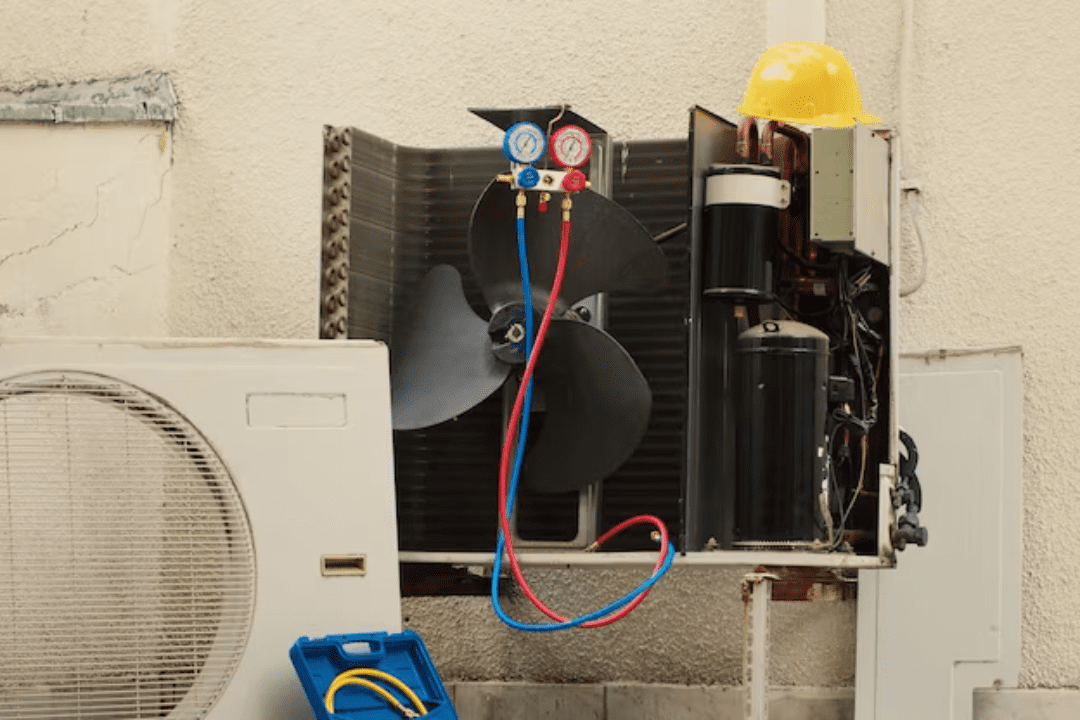
Refrigerant lines connect the indoor and outdoor units, carrying refrigerant through the system in a closed loop. The refrigerant is the fluid that transfers heat, absorbing it from inside and releasing it outside.
How They Affect Cooling Efficiency:
Low refrigerant levels, often caused by leaks, prevent the system from removing sufficient heat from the air. This results in reduced cooling power, longer run times, and less efficient heat transfer. As a result, the AC may blow warm air or take much longer to cool a room.
Compressor
The compressor plays a vital role as one of the key AC unit components. It takes in low-pressure refrigerant gas from the evaporator and compresses it into a high-pressure, high-temperature form. This allows the refrigerant to flow through the coils, release heat, and continue the cooling cycle.
How It Affects Cooling Efficiency:
A failing compressor means the cooling cycle breaks down entirely. It may cause the system to blow warm air, run longer than needed, or stop cooling altogether. Since the compressor controls refrigerant circulation, any fault significantly lowers energy efficiency and increases power usage. It’s often the single biggest factor in poor cooling performance, which is why it’s important to understand AC compressor failures: causes, signs, and repair options, so you can act quickly and avoid more serious damage.
Thermostat
The thermostat senses room temperature and tells the AC when to turn on or off based on your settings. It acts as the command center for the entire system.
How It Affects Cooling Efficiency:
A malfunctioning thermostat may misread temperatures or send incorrect signals to the AC. This results in short-cycling, overcooling, or failing to turn on the unit when needed. Recognizing common AC thermostat problems early helps to prevent unnecessary energy use and ensures consistent indoor comfort.
Condenser Coils
Located in the outdoor unit, the condenser coils are one of the important outside AC unit components that release the heat the refrigerant absorbs from inside your home. As air blows over them, the heat exits into the outside environment, allowing the refrigerant to cool and start the cycle again.
How They Affect Cooling Efficiency:
Have you wondered what happens when your AC condenser stops working? If condenser coils are covered in dirt, leaves, or debris, they can’t release heat properly. This causes the refrigerant to stay too warm, reducing its ability to cool the home effectively. As a result, the system runs longer cycles and consumes more electricity, leading to reduced efficiency and even potential damage to the compressor.
Air Filters
Air filters trap dust, debris, and airborne contaminants before they can enter the system. They protect internal AC repair components and ensure clean airflow across the coils.
How They Affect Cooling Efficiency:
Clogged air filters restrict airflow, reducing the amount of air that reaches the evaporator coils. This can cause the coils to freeze or prevent enough heat from being absorbed. Due to this, your AC will run longer cycles with weaker airflow, consuming more power and cooling less efficiently.
Capacitors
Capacitors are small energy-storage components that provide the electrical jolt needed to start and run the AC motors, specifically the compressor and fan motors.
How They Affect Cooling Efficiency:
When a capacitor weakens or fails, motors can start slowly, shut off early, or stop running altogether. This leads to intermittent cooling, short cycling, and unnecessary strain on the system. That’s why it’s important to understand when and why AC capacitor replacement is necessary, as it can help restore proper performance, prevent further damage, and keep your system running efficiently. Otherwise, your AC may end up using more electricity while delivering less cooling, which drives up energy bills.
Expansion Valve
The expansion valve regulates the flow of refrigerant into the evaporator coils. It ensures the refrigerant enters at the right rate and pressure, which is critical for proper evaporation and heat absorption.
How It Affects Cooling Efficiency:
If the expansion valve is stuck open or closed, it disrupts the flow of refrigerant. Too little refrigerant causes incomplete cooling, while too much causes flooding or coil freezing. Both scenarios reduce the system’s ability to remove heat, causing uneven temperatures.
Blower Motor and Fan
The blower motor powers the indoor fan that pushes cooled air through your ducts and into your rooms. It circulates indoor air over the evaporator coils, allowing the system to absorb heat and cool the space effectively.
How They Affect Cooling Efficiency:
A failing AC blower motor problem can occur due to worn bearings, overheating, or electrical failure, which leads to weak or no airflow, even if the coils are cold. This causes poor heat exchange, hot and cold spots, and longer cooling cycles. The AC works harder to maintain the set temperature, severely reducing cooling efficiency.
Electrical Components
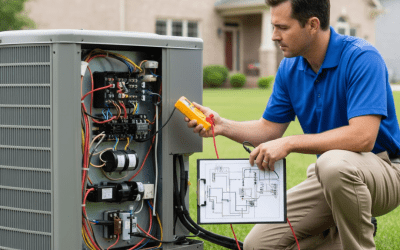
This includes wiring, circuit boards, contactors, and fuses. These AC components deliver power to the system and help regulate operations. Circuit boards manage signals from the thermostat, while contractors send voltage to the compressor and motors.
How They Affect Cooling Efficiency:
Faulty electrical parts can cause intermittent failures, such as the compressor or fan not turning on, or the system failing to start altogether. Bad connections also lead to voltage drops and component stress, which impair performance. Eventually, this results in erratic cooling, longer run times, and unreliable temperature control, ultimately harming efficiency.
Conclusion
Paying close attention to how your AC operates can help you spot early warning signs of trouble, such as unusual noises, weak airflow, or short cycling. These symptoms may seem minor at first, but they often indicate underlying issues that can worsen over time. Addressing them quickly with the help of experienced technicians can help prevent these issues from turning into costly breakdowns and keep your AC running smoothly when you need it most.
If you notice anything unusual or simply want to ensure your system is in top shape, don’t wait. For reliable AC repair in New Braunfels and surrounding areas, contact Classic Services Air Conditioning and Heating, and our expert team will be ready to help you stay cool and comfortable all season long.
Some Commonly Asked Questions
Why isn’t my AC giving out cold air?
This usually happens due to low refrigerant, dirty coils, airflow restrictions, thermostat problems, or failing compressor components.
What causes strange noises like hissing, buzzing, or banging?
Strange noises often indicate loose electrical parts, failing motors, or debris interfering with internal AC components.
Why is my AC turning on and off frequently?
Short cycling is commonly caused by thermostat issues, electrical faults, clogged filters, or overheated components, which stress the system.
My AC is using more electricity but cooling less. Why?
Worn components, dirty coils, poor airflow, or electrical problems force longer run times, increasing energy use while reducing your cooling.
Can I fix refrigerant leaks myself?
No. Licensed HVAC technicians must repair refrigerant leaks, as handling refrigerants requires certification, and improper repairs can damage the system.