This guide walks through HVAC components that fail most often, along with warning signs and symptoms tied to each one, and why diagnosing them correctly is something best left to a professional rather than guesswork at home.
Overview of Common HVAC FailuresCommon HVAC failures often involve capacitors, compressors, blower motors, condensate drain lines, coils, thermostats, and furnace igniters. Warning signs include weak airflow, unusual noises, warm air, short cycling, rising energy bills, water leaks, ice buildup, burning or musty odors, and unresponsive thermostats. Because symptoms often overlap and repairs may involve electrical, refrigerant, or combustion hazards, licensed professional diagnosis and routine seasonal maintenance help prevent costly breakdowns and extend system life. |
The Capacitor: Small Part, Big Impact
If you ask a technician what fails most often in your HVAC system, the capacitor is usually the first answer. It’s a small component that gives your compressor and fan motor the initial jolt of power they need to start running, and it wears out faster than almost anything else in the unit because it’s constantly cycling under electrical stress.
- A humming sound from the outdoor unit without the fan actually spinning
- The system taking longer than usual to start up after the thermostat calls for cooling
- Warm air blowing from the vents even though the thermostat is set correctly
- The unit shutting on and off repeatedly in short bursts
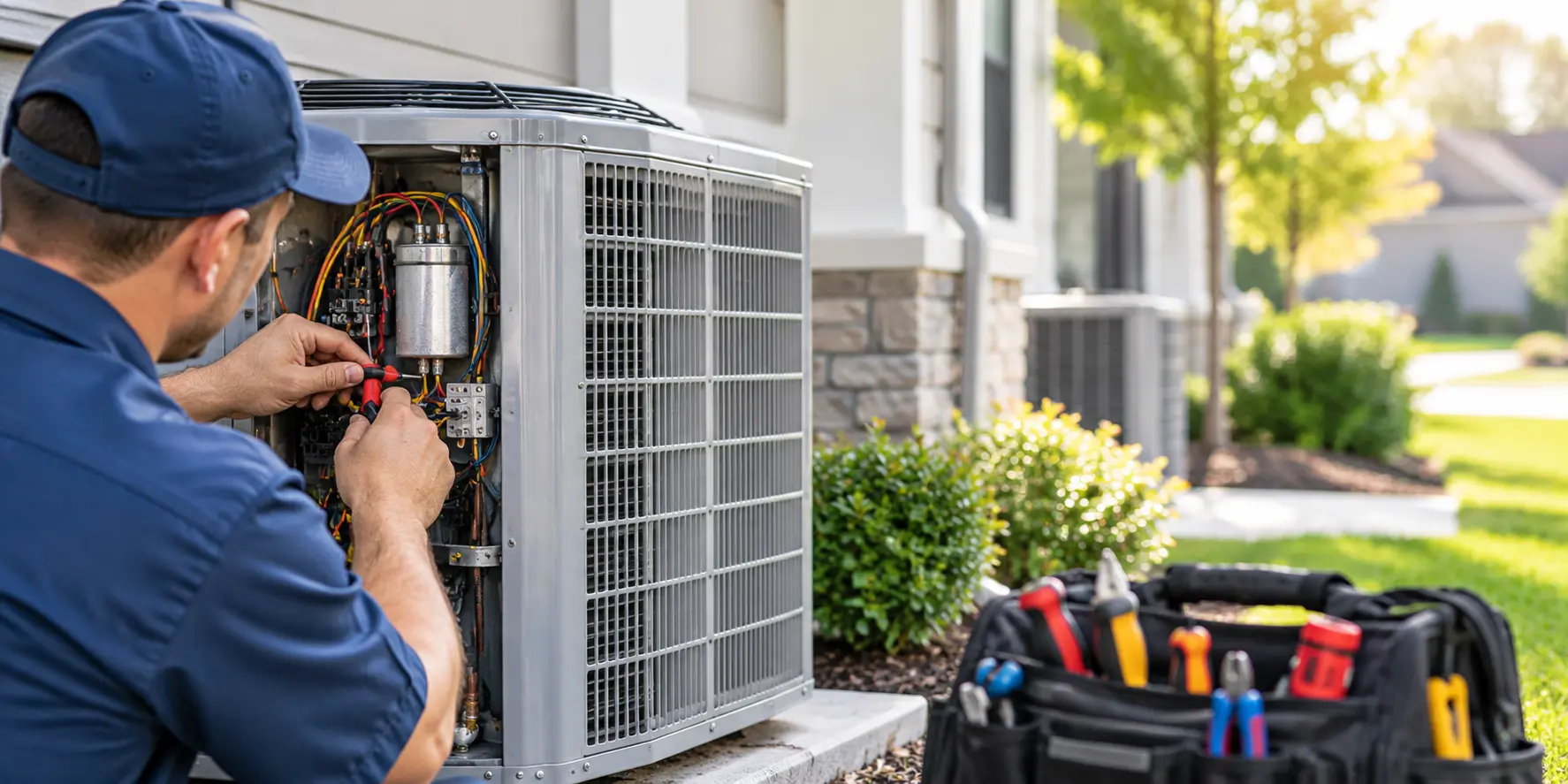
Capacitors store an electrical charge even when a system is powered off, which makes testing and replacing one a job for someone trained to handle it safely. A licensed technician can confirm within minutes whether a capacitor is the actual cause or just one symptom of a bigger issue underneath.
Keep a minor HVAC issue from turning into an emergency call. Classic Services can inspect the components behind poor performance and recommend the right next step.
The Compressor: The Heart of the System
The compressor is what actually moves refrigerant through the system, and when it starts to go, the whole unit’s ability to cool or heat suffers. This is one of the more expensive parts to replace, which makes catching early signs of HVAC system failure here especially valuable and worth a professional’s attention. The U.S. Department of Energy’s guide to common air conditioner problems identifies worn compressor and fan controls and electrical connection issues among problems that can keep cooling equipment from operating correctly.
- Grinding, knocking, or rattling sounds coming from the outdoor unit
- Noticeably weaker airflow from the vents
- The circuit breaker tripping repeatedly when the system starts
- A steady rise in energy bills without a clear explanation
A compressor rarely fails out of nowhere; it usually gives off a combination of these signs for weeks beforehand. That window is exactly when a professional inspection matters most, since a trained technician can often save the compressor with a targeted repair instead of a full replacement, something that’s nearly impossible to judge accurately without the right diagnostic tools.
The Blower Motor: Why Airflow Feels Off
The blower motor pushes air through your ductwork and out through the vents, so when it starts wearing down, airflow is usually the first thing to change. This is often the most common part to fail on an HVAC system that sees heavy use across long, hot summers.
- Airflow that feels weaker than it used to, even at the same thermostat setting
- A burning smell coming from the vents shortly after the system turns on
- Loud clicking or squealing noises during startup
- The system running constantly without actually reaching the set temperature
Because the blower motor connects directly to your electrical system and ductwork, a professional needs to check both the motor itself and what’s causing the strain on it, whether that’s a failing bearing, a clogged filter, or a duct restriction, before recommending a fix. ENERGY STAR notes that poorly performing or leaking ductwork can contribute to comfort problems, airflow issues, and higher utility bills.
The Condensate Drain Line: The Part People Forget
Every cooling system pulls moisture out of the air, and that moisture has to go somewhere. When the condensate drain line clogs with dust, algae, or debris, that water backs up instead of draining away.
- Water pooling near the indoor unit or dripping from the ceiling below it
- A musty smell coming from the vents
- The system shutting off unexpectedly (many units have a float switch that cuts power when water backs up)
This failure often goes unnoticed until there’s already water damage, which is exactly why it belongs on a professional’s routine maintenance checklist rather than something addressed only after a leak appears.
Evaporator and Condenser Coils: Where Heat Exchange Happens
Your coils are responsible for actually transferring heat, either pulling it out of your home or releasing it outside, and dirt or refrigerant issues here quietly reduce how well your whole system performs.
- Ice forming on the indoor coil even during normal operation
- A steady decline in cooling power over several weeks
- Hissing sounds near the outdoor unit, often pointing to a refrigerant leak
- Higher energy bills as the system works harder to make up for reduced efficiency
Refrigerant handling in particular is federally regulated and requires certification, which means coil-related repairs are firmly a job for a licensed professional rather than something to troubleshoot independently.
Thermostats and Igniters: Small Parts With Big Consequences
Among the most common HVAC components that fail most often, thermostats are also enlisted. A miscalibrated thermostat or a worn-out igniter (on gas furnaces) can mimic much bigger problems, and homeowners attempting to self-diagnose these issues often end up replacing the wrong part entirely.
- A furnace pilot light or igniter that won’t stay lit
- Rooms that heat or cool unevenly despite one consistent thermostat setting
- A thermostat display that’s blank, unresponsive, or shows a temperature that doesn’t match the room
A gas furnace igniter involves both electrical and combustion safety considerations, which is reason enough to have a trained technician handle diagnosis and repair rather than working through it alone.
Why This Is a Job for a Professional, Not a Guessing Game
Individually, any one of these HVAC warning signs and symptoms might seem minor enough to investigate on your own. In practice, most of these components overlap: a bad capacitor can strain a compressor, a clogged drain line can affect coil performance, and a professional’s diagnostic tools are what actually separate the real cause from the symptom you happen to notice first.
For a closer look at what those overlapping signs can mean, our breakdown of unexpected signs your HVAC system needs repair goes deeper into symptoms worth flagging for a technician.
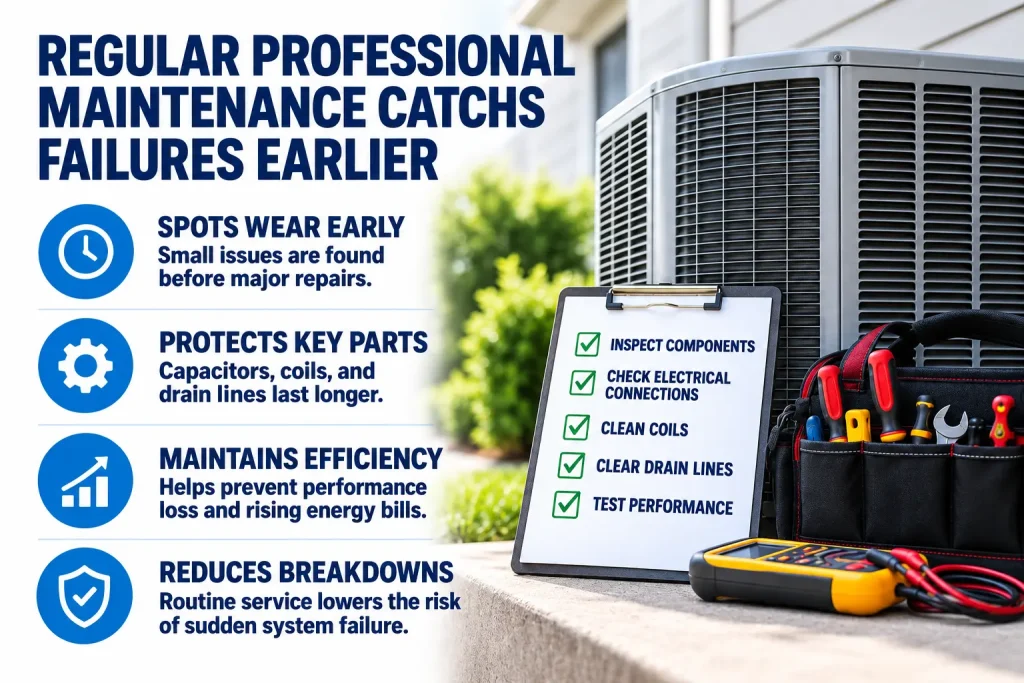
Why Regular Professional Maintenance Catches These Failures Earlier
Most of the components covered here don’t fail overnight. Capacitors weaken gradually, coils accumulate dirt slowly, and drain lines clog a little more with each season. A licensed technician inspecting your system on a regular schedule catches these changes with proper testing equipment, long before they show up as a warm house or a dead unit.
For a full picture of what ongoing professional care actually involves, our guide to HVAC repair, installation, and preventive maintenance in Texas covers what a complete maintenance routine looks like across the seasons.
Choosing Someone to Look After These Parts
Because these failures often overlap, it matters who’s diagnosing the problem. A technician who only replaces the obvious part without checking what caused it tends to send you back into the same repair within a year, which is exactly why the right professional matters as much as the repair itself.
If you’re evaluating who to call, our rundown of qualities to look for when hiring a professional HVAC maintenance company is worth reading before your next service call.
Get These Components Checked Before They Fail
Classic Services provides HVAC service near New Braunfels, Seguin, and surrounding areas, with licensed technicians who know exactly what these early warning signs mean and have the tools and training to diagnose and repair them safely, before a small issue becomes a full system replacement.
When your HVAC system shows warning signs, guessing can be costly. Turn to Classic Services for safe, accurate repair diagnosis and recommendations.
Common Questions About HVAC Component Failures
What is the most common part to fail on an HVAC system?
Technicians most often point to the capacitor. It handles constant electrical stress every time the compressor or fan starts, which makes it one of the first things to wear out, and one that a professional can typically test and replace quickly.
Can I diagnose these issues myself before calling someone?
It’s best not to. Many of these symptoms overlap between components, and capacitors in particular hold an electrical charge that makes DIY testing unsafe. A professional inspection gives you an accurate answer instead of a guess.
Should I try to fix a failing capacitor or compressor myself?
No. Both involve live electrical components and, in the compressor’s case, pressurized refrigerant that requires certified handling. These repairs should always go to a licensed HVAC technician.
Can regular professional maintenance prevent most of these failures?
Many of them, yes. Capacitors, coils, and drain lines all benefit from routine inspection by a trained technician, and catching wear early is almost always less expensive than an emergency repair.
How often should a professional inspect these components?
Most technicians recommend a seasonal check, once before summer and once before winter, especially for capacitors, coils, and drain lines that see heavy use during peak seasons.