Are you noticing a sudden, unexplained spike in your electricity bills? The culprit might be hiding behind your walls and ceilings. As this conditioned air escapes through cracks and poor seals, it forces HVAC systems to run longer and consume more energy to maintain consistent indoor temperatures.
Attic heat gain further increases cooling expenses when hidden airflow restrictions or poor system calibration compromise your central air distribution. Because these hidden problems often go unnoticed for years, homeowners end up struggling with stubbornly high summer bills without knowing why. So, to help you regain control, we will break down the hidden role of duct leakage and attic heat gain in high bills, and how you can spot the warning signs of systemic inefficiency before your equipment fails.
Duct Leakage and Attic Heat Gain Issue OverviewDuct leakage and attic heat gain silently increase energy bills by forcing HVAC systems to work harder while reducing airflow efficiency and indoor comfort. Hidden leaks allow conditioned air, dust, humidity, and contaminants to circulate through the system, contributing to uneven temperatures, poor air quality, moisture risks, and accelerated equipment wear. Excess attic heat further strains cooling performance, especially when ductwork passes through overheated spaces. Proper professional duct sealing, systemic pressure corrections, and routine HVAC inspections help improve efficiency, lower cooling costs, and protect long-term system performance. |
What is Duct Leakage and Why Does It Matter?
Before understanding how duct leakage and attic heat increase bills, it’s important to examine what duct leakage is. It is the unintended escape of conditioned air through gaps, cracks, or disconnected joints in your HVAC system. Instead of uniformly distributing air throughout your property, damaged ducts lose expensive heating and cooling to unconditioned zones like attics or crawlspaces.
This hidden issue typically stems from poor initial installation, ageing materials, extreme attic heat, pest activity, or high system pressure forcing weak seams apart. Understanding how leaky ducts waste energy is crucial, as poor seals can lead to significant energy loss, costing you more and more money.
Why It Matters?
Now that we know why duct leaks happen, let’s understand why this matters for your home.
Duct leakage matters because it wastes conditioned air before it reaches your rooms, forcing your HVAC system to run longer and use more energy. This can
- Raise utility bills
- Create uneven temperatures
- Reduce indoor comfort
- Strain equipment over time.
Not only that, but it can also pull pollutants and dust into the air, which can severely worsen health conditions like asthma. This is why reaching out to a trusted HVAC company in New Braunfels at the first sign of trouble can save both your health and your wallet in the long run.
| Stop duct leakage from driving up your energy bills.
Get expert help with professional ventilation solutions for duct leakage and airflow problems. |
The Direct Impact of Attic Heat Gain on Cooling Costs
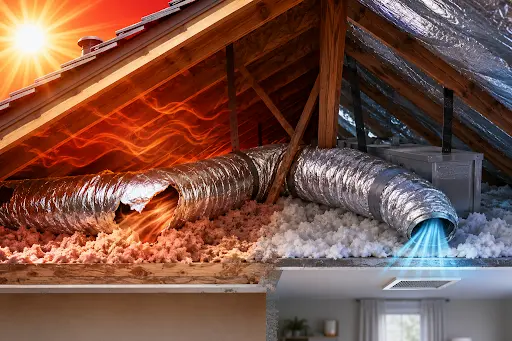
When summer solar heat traps temperatures at 120–150°F in poorly ventilated attics, it turns ceilings into radiators that bake the home’s structure and helps explain why energy bills increase in summer. Without adequate attic insulation, this problem compounds inside ductwork running through this “oven,” where minor leaks suck in superheated, dusty air that spikes cooling costs.
Warning Signs to Watch For:
- Performance Drops: Continuous AC cycling, weak airflow, or warm air blowing from vents.
- Comfort Issues: Spike in utility bills, uneven room temperatures, and stubborn hot spots.
- Air Quality Issues: Rapid dust buildup around vents, musty odours, and aggravated allergies from attic contaminants.
- Physical Clues: Condensation near ducts, strange whistling noises, and frequent system repairs.
Hidden HVAC Energy Loss Points
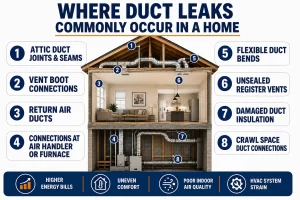
This infographic highlights the most common locations of duct leaks in a home, including attics, vent connections, air handlers, and crawl spaces. These hidden duct leaks reduce HVAC efficiency, increase energy costs, weaken airflow, and contribute to indoor comfort and air quality problems.
You can also check out our blog on how proactive HVAC service lowers your energy bills, to stop energy waste, and protect your system further.
How Professionals Reduce Energy Bills Caused by Duct and Attic Issues
Duct leakage and attic heat gain are complex, interconnected system failures that require professional diagnostic tools and certified HVAC expertise to resolve accurately. Understanding the true role of duct leakage and attic heat gain in your high bills is the first step; without proper equipment, missed leak points and improper repairs will continue quietly inflating your energy costs every month.
Duct Issues
Leaky Duct Seams and Joints
Gaps at connection points create a path of least resistance, letting conditioned air escape behind walls and ceilings before ever reaching your rooms. This continuous loss forces the HVAC system to run longer cycles, driving up monthly utility bills to compensate for the missing air volume.
Crushed, Loose, or Disconnected Ducts
Damaged ductwork chokes airflow and dumps conditioned air into empty spaces. Restoring proper airflow requires repairing collapsed sections and reconnecting loose joints.
Air Handler Leak Sealing
The air handler operates under the highest pressure in the system, making gaps here a concentrated source of energy loss. Technicians inspect and seal every penetration point around the cabinet, locking conditioned air inside where it belongs.
Attic Issues
Thermal Air Leaks at System Connections
Gaps around unsealed duct junctions and cabinet seams create a vacuum effect in your ceiling. Instead of cooling your home, your system dumps conditioned air into the attic while drawing superheated, dusty air back into the lines, creating an efficiency-destroying pressure imbalance.
Accelerated Attic Heat Transfer
Extreme attic temperatures penetrate compromised distribution lines, radiating directly through thin or degrading duct walls. As cold supply air passes through a 140°F attic environment, its temperature rises before reaching your rooms, completely cancelling out your system’s cooling efficiency.
Structural Heat Retention and System Strain
Stagnant, superheated attic air bakes the outer casing of your central HVAC equipment, trapping intense heat around critical components. This severe environmental stress forces internal parts to operate under extreme thermal conditions, increasing the risk of sudden mechanical breakdowns during peak summer.
If duct or attic problems are affecting your comfort and energy costs, learn more about HVAC repair, replacement, or installation to keep your system operating efficiently.
Conclusion
Your home’s HVAC system is your biggest energy consumer, but right now, leaky ducts might be wasting expensive conditioned air and cooling your attic instead of your house. You don’t have to tackle these hidden issues alone. The team at Classic Services Air Conditioning & Heating specializes in restoring proper system airflow and sealing complex duct network leaks. Our experts deal with every minor and major issue with complete professionalism and efficiency.
Reclaim your home’s comfort, protect your equipment, and permanently lower your utility bills.
Homeowner FAQs About Duct Leakage Problems and Attic Heat Gain
Can duct leakage affect a home’s resale value?
Yes, poor HVAC efficiency, uneven temperatures, and high utility costs from duct leakage may undermine home inspections and buyer confidence during resale.
Can duct leakage impact thermostat accuracy?
Yes, leaking ducts may create inconsistent indoor temperatures, causing thermostats to misread conditions and forcing HVAC systems to cycle improperly.
How can you tell if your AC unit is energy efficient?
An energy-efficient AC unit cools rooms evenly, maintains stable temperatures, cycles normally without running constantly, and does not cause sudden spikes in monthly energy bills. Read our guide on how to tell if your AC unit is energy efficient.
Are attic fans enough to solve heat problems in the attic?
Attic fans can help reduce trapped heat, but they work best when combined with proper insulation and balanced intake and exhaust ventilation.
Can recessed ceiling lights increase heat transfer in the attic?
Yes, poorly sealed recessed lights can allow hot attic air to enter living spaces, increasing indoor temperatures and straining the cooling system.