What needs fixing when your AC is blowing air but not heating or cooling? There is no single repair that fits every case. Restricted airflow, control faults, and refrigerant problems can each affect performance, and they require different solutions. Before agreeing to work on your system, you deserve a clear explanation of what has failed. Here, Classic Services explains how professional diagnosis connects the symptoms you notice with the repair your home actually needs.
AC Not Heating or Cooling: Quick OverviewAn AC system can blow air without heating or cooling when airflow, thermostat settings, ducts, furnace or heat pump parts, indoor coils, refrigerant, outdoor units, electrical components, or system capacity fail. Check filters, vents, and thermostat mode safely. Note symptoms, ice, noises, and affected rooms for the technician. Leave gas, carbon monoxide, electrical, and repair issues to professionals, since similar symptoms have different causes. |
What It Means When the System Runs but the Home Stays Uncomfortable
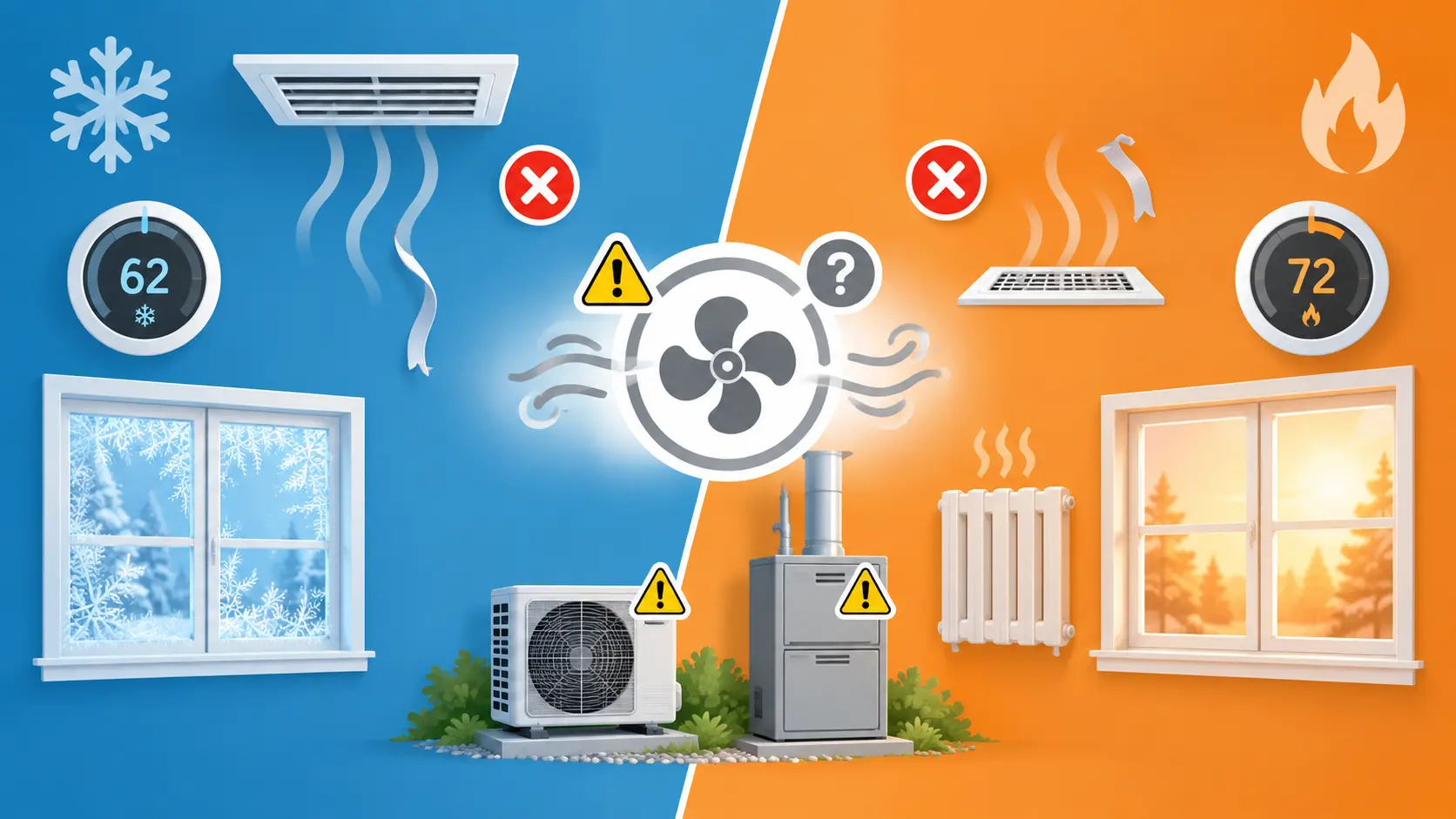
Your AC system moves air through the home, but the way it heats or cools that air depends on the equipment. A furnace generates heat. A heat pump transfers heat between the home and outdoors. In cooling mode, an air conditioner removes heat from indoor air and releases it outside. An AC system needs the correct thermostat signal, adequate airflow, and functioning heating or cooling components to change the indoor temperature. If one part of that process is interrupted, the blower may still run while the home remains uncomfortable.
Notice whether air is coming from the vents and whether it feels warm, cool, or weak. Also note whether the problem happens in heating mode, cooling mode, or both. These symptoms can have several causes, so they are helpful details to share with a technician, but they do not confirm which part needs repair.
Is your home still uncomfortable even though the system is running? Classic Services can inspect the heating or cooling equipment and explain what the actual problem is.
Top Causes of AC Heating and Cooling Failure
Common Causes (Heating and Cooling)
- Thermostat settings: The fan set to On, the wrong mode, or a setpoint that doesn’t call for heating or cooling can leave the blower running with no conditioned air. Carrier lists incorrect thermostat settings among the most common causes of an AC blowing warm air.
- Clogged filter: A dirty filter restricts airflow. In a furnace, that can overheat the unit. In an AC, it can lead to a dirty and then frozen coil.
Heating Problems
- Overheating from restricted airflow: A clogged filter lets heat build up around the heat exchanger. The high limit switch then shuts off the burners, but the blower keeps running and sends unheated air through the vents. A typical sign is warm air for a few minutes, then cold air.
- Dirty or failed flame sensor: Carbon buildup keeps the sensor from detecting the flame, so the control board shuts off the gas. This is described as the most common ignition-related cause.
- Ignition or pilot problems: A failed ignitor, a pilot light that has gone out on an older furnace, or an interrupted gas supply can stop the burners from lighting.
- Clogged burners: Blocked burners can prevent fuel from reaching the flame, leading to uneven or no heating at all.
- Heat pump defrost issues: A failed defrost sensor or control board, low refrigerant charge, or an outdoor fan that isn’t running can leave the unit blowing cold air in Heat mode.
- Reversing valve problems: A stuck reversing valve can leave a heat pump cooling normally but unable to heat. This valve switches refrigerant flow between heating and defrost or cooling modes.
Cooling Problems
- Low refrigerant: A leak lowers the charge, so the system can’t absorb heat from indoor air properly. One source calls this the most common cause of warm air while the AC is running.
- Frozen evaporator coil: Restricted airflow, a dirty coil, or a refrigerant leak can freeze the coil. Ice then blocks airflow, and cooling gets worse.
- Dirty condenser coil: The coil can’t release heat outdoors. Pressure rises, and a safety cutout may stop the compressor while the fan keeps running.
- Electrical component failure: A faulty contactor or capacitor can keep the compressor from starting. A failed capacitor is often mistaken for compressor failure.
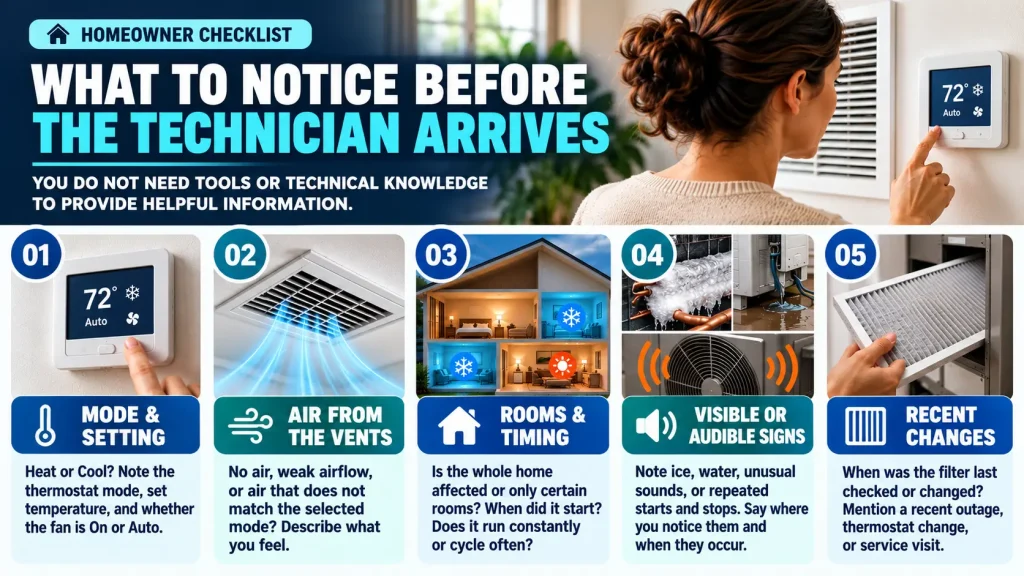
What to Notice Before the Technician Arrives
You do not need tools or technical knowledge to provide useful information. Note whether the issue affects heating, cooling, or both; whether air from the vents is warm, cool, or weak; and whether the problem affects the whole home or particular rooms. Also mention any ice, water, unusual sounds, or repeated cycling, and when you last checked the filter.
If you smell gas, leave the home and contact the gas utility or emergency services from outside. If a carbon monoxide alarm sounds, get everyone outside and call emergency services. For a burning smell, severe grinding, water near electrical equipment, or a breaker that trips repeatedly, turn off the system if it is safe to do so and request service.
Why Professional Diagnosis Saves Time
Several different problems can produce similar symptoms. Restricted airflow, a control fault, or an equipment problem may all leave a home uncomfortable while the system runs. Replacing a part based only on the symptom can miss the underlying cause. A technician can check,
- Pinpoints the root cause: A technician tests the system instead of guessing, so you avoid repeated trial-and-error fixes for a symptom that has several possible sources.
- Prevents repeat visits: Fixing the actual fault the first time means fewer follow-up calls and less time without comfortable air.
- Avoids unnecessary part swaps: Testing before replacing parts stops you from paying for and waiting on components that were never the problem.
- Uses proper test tools: Measuring airflow, electrical readings, and component operation reveals faults that can’t be seen or guessed by eye.
- Catches linked problems early: A clogged filter or weak airflow can lead to a frozen coil, so one inspection can find related issues before they cause a second breakdown.
- Flags safety concerns right away: Issues with gas, burners, or electrical parts are identified and handled safely rather than delaying the repair with failed DIY attempts.
- Gives a clear action plan: You learn what’s wrong, which repair options exist, and what each step would fix, so decisions happen faster.
- Separates repair from replacement: An assessment of the equipment’s condition and the home’s needs helps you decide sooner whether a repair is enough.
The inspection should help explain what is not working, what repair options are available, and what the next step would address.
For a broader look at professional service, maintenance, replacement, and installation decisions, read our complete Texas HVAC repair and maintenance guide.
When Heating or Cooling Problems May Affect Efficiency
A system that runs longer than usual, heats or cools unevenly, or struggles to reach the thermostat setting may need attention. But these signs do not establish the cause on their own. Professional pre-season checkups, cooling in spring and heating in fall, and checking filters regularly. A technician can determine whether maintenance, a repair, or further evaluation is appropriate.
You can also review our guide to improving your home’s heating and cooling efficiency for additional context on comfort, airflow, and system performance.
Tell us whether the issue is with heating, cooling, airflow, or a particular room. That information helps our licensed experts understand your concern and arrange the appropriate service.
Frequently Asked Questions
Why is the fan running if my AC system is not heating or cooling?
If the thermostat fan is set to On, the indoor blower can run continuously even when the system is not actively heating or cooling. Set it to Auto and confirm the system is in the correct mode. If the home still does not reach the set temperature, the problem may need a technician’s diagnosis.
Is frost on the outdoor unit of a heat pump a problem?
Not always. Frost can form on a heat pump’s outdoor coil during heating, and the unit may run a defrost cycle to clear it. If heavy ice remains or the system does not resume heating, contact an AC technician.
What should I do if I smell gas or a carbon monoxide alarm sounds?
Leave the home and get everyone outside. From outside, call emergency services if the carbon monoxide alarm sounds. If you smell gas, contact the gas utility or emergency services from outside.
What information should I give the technician?
Tell them whether the issue occurs in Heat mode, Cool mode, or both; whether the vent air feels warm, cool, or weak; which rooms are affected; and whether you noticed ice, water, unusual sounds, or repeated starts and stops. Mention when you last checked or changed the filter.
Can a dirty air filter stop both heating and cooling?
A clogged filter can restrict airflow and reduce performance in a furnace, air conditioner, or heat pump. Check the filter and clean or replace it according to the equipment instructions. If airflow or comfort does not improve, another issue may be involved.