
Your gas furnace’s pilot light plays a pivotal role in heating your home—it ignites the gas circulated to the powerful burners within your furnace. These burners heat the air that’s moved around by fans throughout your home. When the pilot light goes out, the gas for these burners won’t ignite, and your furnace will stop working.
Not all furnaces have pilot lights—most newer furnaces use an electric ignition system. Check your furnace’s instruction manual to see whether or not you have a pilot light—it’s possible that there’s a fault with your electric ignition system and that no pilot light exists.
A furnace pilot light is only found on a gas furnace—there’s no need for a pilot light on electric furnaces because there’s no gas for those furnaces to ignite.
For those of you who do have a pilot light—this guide is for you. We’re going to teach you how to light your pilot light if it’s been extinguished:
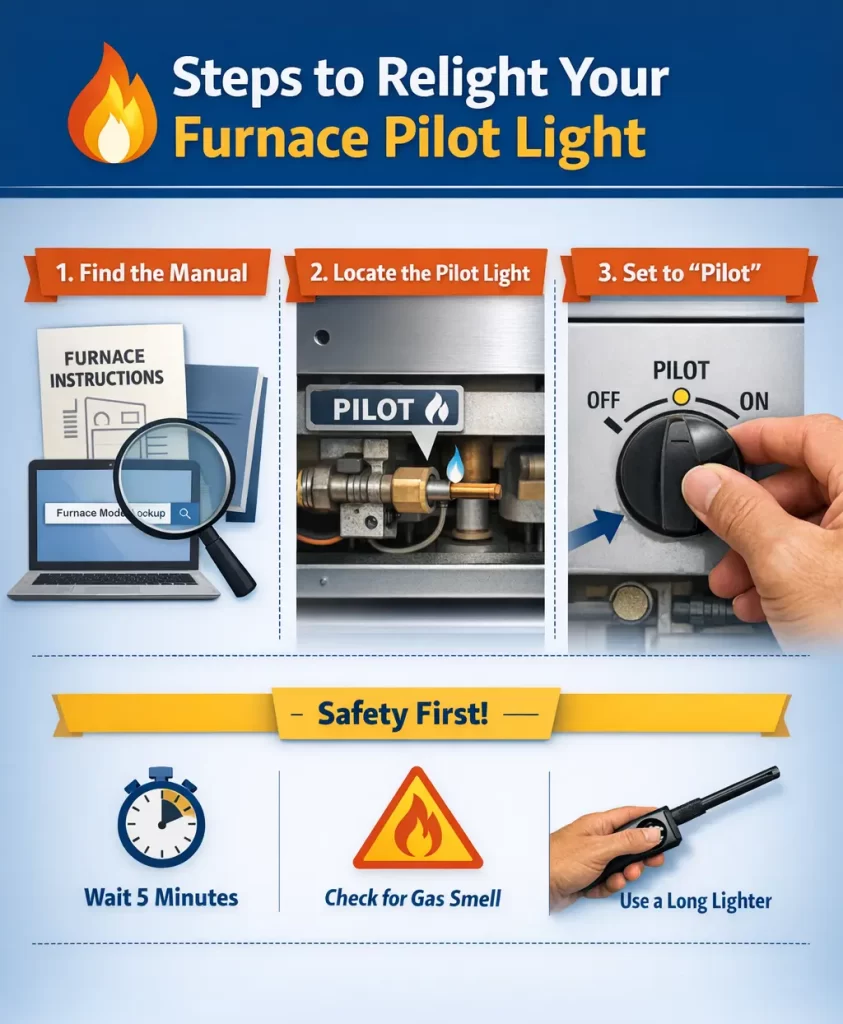
Furnace Pilot Light Relighting Overview GuideGas furnace pilot lights ignite burners that heat air; when extinguished, the furnace stops working. Only gas furnaces use pilot lights, while newer systems often rely on electric ignition. To relight one, consult the furnace manual, locate the pilot tube and control knob, switch gas off, wait five minutes, then light the pilot using a long lighter while holding the reset. Ensure it stays lit before turning settings back on. |
Simple Steps to Relight Pilot Lights in Most Furnaces
Find the Instruction Manual or Label for Your Furnace
Most of us don’t keep physical instruction manuals around anymore. Fortunately, it’s easy to find the make and model on most furnaces—and manufacturers offer instruction manuals online. These instruction manuals will contain valuable information, including:
- The location of the pilot light
- The location of the pilot light on/off switch, as well as the reset button (if present)
- Instructions on how to relight the pilot light
- Safety instructions
While we’re going to cover most of the information you’re likely to see in your manual in this article, it’s always important to go over the manufacturer’s instructions. While reigniting a pilot light is generally safe, it’s always best to take extra precautions when working with a gas furnace—the instruction manual will help you do this.
Some furnaces feature an instructions label to help you light your pilot light—these instructions labels are often found on the front of the furnace, near the pilot light, or on the side of the furnace. They’re usually highly visible.
Locate the Furnace’s Pilot Light and “On/Off” Switch
The pilot light is generally located at the bottom of the furnace and should be visible without needing to move any part of your furnace. You’ll find a small tube called the “pilot tube”—there’s often a label on it that says “pilot” or a label with a small flame.
Once you’ve located the pilot tube, you should locate the on/off switch or knob—it’s usually located near the pilot light. The switch or knob will often have three settings:
- On
- Off
- Pilot/reset
Turn off your thermostat to stop your furnace from heating your home. Once you’ve done that, move the knob or switch that controls the pilot light (and the gas valve) to “off”. Wait at least five minutes for any excess gas in the furnace to disperse.
Relight the Pilot Light
Hold a long lighter to the tip of the pilot tube. Switch the pilot light switch to “Pilot”—you may also be instructed to hold a reset button. The reset button is often the same as the pilot light switch—you simply press and hold it instead of having to turn the knob.
Light your lighter, and hold it near the tip of the pilot light tube until it ignites. Wait for 30-60 seconds to ensure that the pilot light stays lit. Should the pilot light go out (or not ignite after a minute), turn off the gas valve, wait another 5 minutes for the gas to disperse, and try again.
Once the pilot light stays lit, you’ve made it to the final step. Turn the knob back to “On” then turn the thermostat back on. You may need to release the reset button—whether you release the button and turn the knob or simply turn the knob depends on how your furnace was manufactured. Either way, your pilot light should now stay lit!
In some circumstances, the pilot light will not stay lit. This could indicate that there’s a problem with your furnace—specifically, the thermocouple could be broken. The thermocouple is a safety feature that detects when the pilot light is on—it’s designed to shut off the flow of gas when the pilot light is off. When it’s in disrepair, it can automatically shut off the flow of gas even when the pilot light is on, killing the pilot light.
When you have a broken thermocouple or another faulty component that leads to your pilot light going out repeatedly, you’ll need professional furnace repair services.
Cold nights need safe, proper comfort. If your furnace pilot is out, here’s what to do.
Safety Tips to Keep in Mind While Lighting Your Pilot Light
Do Not Light a Pilot Light Before Turning the Furnace Off
We cannot stress this point enough—do not light the pilot light until you’ve turned off the gas valve and the thermostat and until you’ve waited at least 5 minutes for any excess gas to dissipate.
There are times when faulty thermocouples and other faulty components allow gas to flow even when the pilot light is out; if you smell gas, DO NOT attempt to light the pilot light. Evacuate your home, taking care not to touch any electrical switches on your way out. Call emergency services.
Keep Your Hands and Clothing Away from the Flame
We highly recommend using a long lighter to light the pilot light—a long barbecue lighter should often do the trick. Do not use a long match, and keep your hands and clothing far away from the pilot light at all times.
Look around your furnace before lighting the pilot light. Move any flammable materials away from the furnace before attempting to reignite the pilot light.
Troubleshooting When Your Furnace Stops Blowing Hot Air
If your furnace stops blowing hot air, start by checking what type of ignition system it uses. A quick pilot light vs. igniter switch furnace troubleshooting check can help you tell whether your system uses a standing pilot flame or an electronic igniter, which makes it easier to spot the source of the problem.
If your furnace has a pilot light, confirm that the flame is on and stable. One common issue is a furnace pilot light not staying lit, which can keep the burners from igniting and prevent warm air from circulating through your home. This may be caused by a dirty thermocouple, a clogged pilot opening, or an issue with gas flow.
You should also inspect the thermostat, air filter, and breaker. If everything appears normal and the furnace still is not heating, it is best to call an HVAC professional.
Still Having Trouble? Call the Professionals at Classic Services
Once your pilot light is lit, your furnace should be working properly.
Pilot lights go out somewhat regularly on some furnaces—this is especially true in drafty homes, where currents of air can blow out the pilot light. Extinguished pilot lights are also more common on older furnaces. The location and age of your furnace are important factors, and your furnace may not need repairs.
There are, however, circumstances where your furnace almost definitely needs to be replaced. This is also beneficial because older gas furnaces often operate at 56%–70% efficiency, while modern high-efficiency furnaces can reach 90%–98.5% efficiency, meaning far more fuel is converted into usable heat for the home. These circumstances include:
- When the pilot light will not light
- When the pilot light will not stay lit
- When the pilot light is lit, but your house isn’t getting warmer
In any of these circumstances, you should call a professional for furnace repair. You should also call a professional if you’re not comfortable lighting your furnace pilot light yourself. Working with gas appliances can be scary—and for good reason. Gas is dangerous—there’s no shame in calling the pros.
FAQs
Why does a furnace pilot light keep going out?
A pilot light may repeatedly go out due to drafts, a dirty pilot opening, a faulty thermocouple, low gas pressure, or debris buildup. These issues prevent the flame from staying stable.
How do I know if my furnace has a pilot light or electronic ignition?
Older gas furnaces usually have pilot lights, while modern units often use electronic ignition systems. Checking the furnace model number or manual can confirm which ignition type your system uses.
What does a healthy furnace pilot light look like?
A properly functioning pilot light should produce a steady blue flame. Yellow, flickering, or weak flames may indicate dirt, improper gas flow, or other furnace component issues.
Can wind or drafts affect a furnace pilot light?
Yes, strong drafts in older or poorly sealed homes can sometimes blow out a pilot flame, especially if the furnace is located in basements, garages, or areas with airflow.
How long does a furnace usually last?
Most gas furnaces last between 15 and 20 years with proper maintenance. Older units may become less efficient and more prone to issues such as pilot light failures.
When should I replace my furnace instead of repairing it?
Replacement is often recommended if the furnace is over 15 years old, requires frequent repairs, struggles to heat your home, or causes significantly rising energy bills.