Ever wonder why your air conditioner suddenly starts blowing warm air, runs nonstop, or doesn’t turn on when you need it most? In many cases, the issue isn’t your AC unit; it’s your thermostat. This small device controls when your system starts, stops, and how much it cools, making it the command center of your entire HVAC setup. According to the U.S. Department of Energy, thermostat issues account for a significant number of inefficient cooling complaints and energy waste. Common problems like miscalibration, faulty wiring, dead batteries, or sensor errors can throw your whole system off balance, making it important to understand the root causes behind each problem.
In this post, we’ll break down these most common AC thermostat problems, what causes them, and how they directly affect your cooling performance. Understanding these issues can help you spot trouble early and keep your home comfortably cool all season long.
How Thermostats Work in Your AC System
A thermostat controls your AC system by sensing indoor temperature and signaling the system to maintain a set comfort level. It contains a temperature sensor, often a thermistor, which detects changes in room temperature. When the air becomes warmer than the set temperature, the thermostat sends an electrical signal to the air conditioner’s control board to activate the compressor and cooling cycle. Once the desired temperature is reached, it cuts off the signal, turning the system off to conserve energy. Modern digital and smart thermostats use microprocessors for precise control, learning user preferences, and integrating with Wi-Fi for remote access. This cycle of monitoring and regulating temperature ensures energy efficiency, consistent comfort, and optimal HVAC system performance.
If you’re interested in understanding more about how different AC parts work together, check out our guide to frequent AC repair components for detailed insights.
Signs of AC Thermostat Problems
Inaccurate Temperature Readings
If your thermostat’s displayed temperature doesn’t match the actual room temperature, it may be misreading the environment. This can cause the AC to run longer than needed or stop too soon, leaving your home either too warm or too cold.
AC Not Turning On or Off Properly
If your AC thermostat is not turning on properly, you may notice that the air conditioner either won’t start, keeps running nonstop, or turns on and off in short intervals (known as short cycling). These issues often stem from faulty sensors, wiring problems, or worn-out thermostat components. When the thermostat miscommunicates with the HVAC unit, it can reduce cooling efficiency, increase energy use, and put extra strain on the compressor, potentially shortening the system’s lifespan.
Unresponsive Thermostat Controls
A thermostat that doesn’t respond when you adjust settings or keeps resetting itself can indicate electrical issues or internal damage. In smart thermostats, it might also be a sign of a software glitch or a weak Wi-Fi connection disrupting control signals.
Blank or Flickering Display
A thermostat blank, AC not working situation usually points to power interruptions, dead batteries, or internal damage. This can make the thermostat unresponsive, preventing your cooling system from operating correctly.
Unusually High Energy Bills
A sudden increase in energy bills without any change in usage can point to thermostat inefficiency. If the thermostat isn’t cycling your AC properly, the unit may run continuously, consuming more electricity than necessary.
Common Causes of AC Thermostat Problems
Below are some of the most frequent reasons for the AC thermostat not working properly:
1. Wiring or Electrical Issues
Among the most common AC Thermostat Issues are wiring or electrical faults. Damaged, loose, or corroded wires can disrupt communication between the thermostat and your HVAC system. Even a small voltage fluctuation or power surge may damage the internal circuitry, leading to inconsistent or unreliable performance.
2. Dirt and Dust Buildup
Dust can settle inside the thermostat over time, especially around the temperature sensors. This buildup can cause inaccurate readings or delayed responses. Gently wipe or blow away the dust with a soft brush or compressed air to help it function properly.
3. Poor Thermostat Placement
Placement plays a major role in how accurately your thermostat reads room temperature. When installed near heat sources, vents, or direct sunlight, it may give false readings. For best results, mount it on an interior wall, away from these external influences.
4. Sensor Malfunction or Miscalibration
As thermostats age, their internal sensors can lose calibration or fail due to wear or minor defects. This often results in the AC turning on or off at the wrong times. A technician can recalibrate or replace the faulty sensor to restore proper control.
5. Software Glitches
Smart thermostats rely on software to operate efficiently. Outdated firmware or minor bugs can lead to random resets, Wi-Fi drops, or scheduling errors. Regularly checking for and installing updates helps maintain steady performance.
6. HVAC Compatibility Issues
A thermostat that isn’t suited to your HVAC system can misread signals or struggle to control temperature settings. Always confirm that the voltage, wiring, and system type are compatible before installation to avoid cooling inconsistencies.
Schedule your AC thermostat service with Classic Services Air Conditioning & Heating for fast, reliable repairs and optimal home cooling.
Professional Solutions and Troubleshooting for AC Thermostat Problems
1. Comprehensive Thermostat Diagnosis
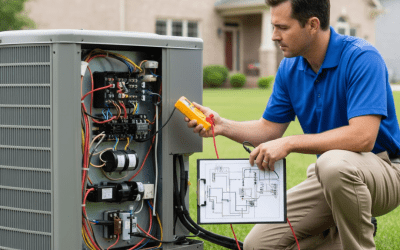
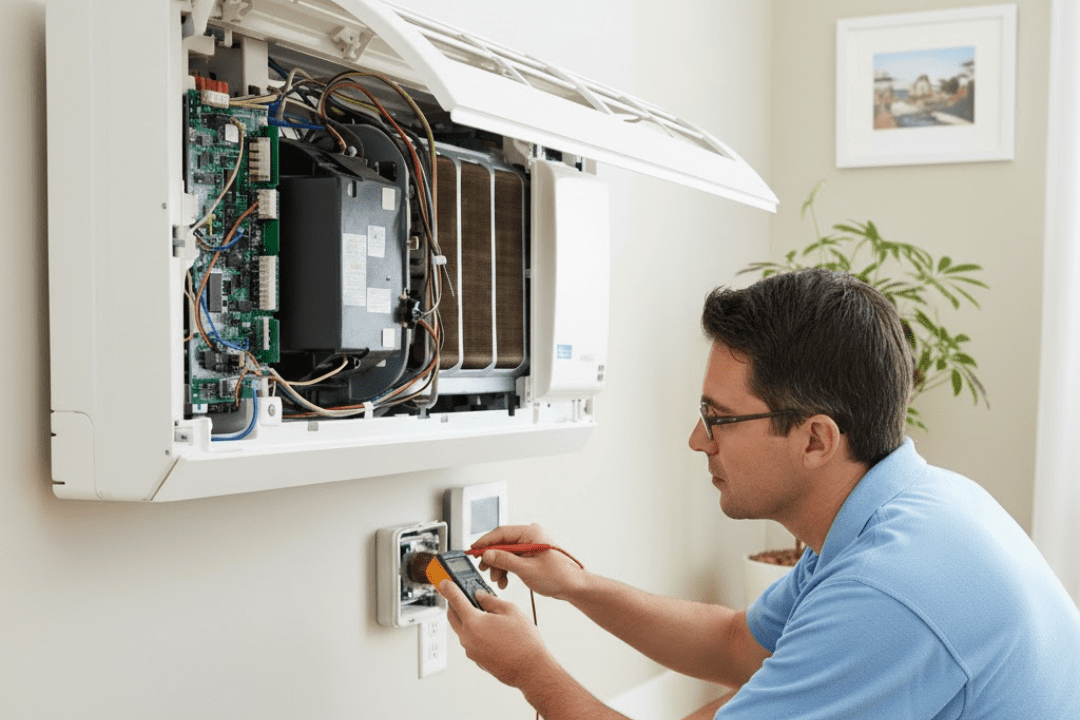
In professional AC thermostat troubleshooting, technicians begin by inspecting the wiring, power source, and communication between the thermostat and HVAC system. Using advanced diagnostic tools, they measure voltage, continuity, and circuit stability to detect damaged or loose connections. Once the issue is found, they repair or replace faulty components to restore normal system operation.
2. Thermostat Recalibration
Inaccurate or inconsistent temperature readings often require recalibration. Technicians use calibrated tools to adjust the internal sensors of the thermostat. This correction restores proper temperature detection and helps the cooling or heating system operate at the right intervals.
3. Cleaning and Sensor Maintenance
Dust and debris on sensors or electrical contacts reduce accuracy. Technicians open the thermostat carefully and remove buildup using a soft brush, compressed air, or an electronic-safe cleaner. A clean thermostat performs more reliably and often lasts longer.
4. System Rewiring or Control Board Repair
Sometimes the thermostat operates correctly, but the air conditioner still fails to respond. In such situations, the issue lies within the HVAC control board or wiring. Technicians test circuits to locate burnt connections or faulty relays. Repairing or replacing damaged parts restores smooth communication between the thermostat and the cooling unit.
5. Compatibility Checks and Upgrades
Older thermostats may not match modern HVAC systems. Technicians assess the system and suggest an upgrade to a digital or smart thermostat when needed. They confirm that the new model fits the existing wiring, voltage, and system design for smooth operation.
6. Testing and System Calibration After Repairs
Once repairs or upgrades are complete, technicians test the full HVAC system. They run heating and cooling cycles, observe temperature response, and make final adjustments for accurate operation. This last step confirms that the thermostat and cooling system work together efficiently.
Tips to Prevent AC Thermostat Problems
- Clean the thermostat regularly using a soft, dry cloth to prevent dust buildup that interferes with sensor accuracy.
- Install the device on an interior wall, away from heat sources, sunlight, or drafts, for precise temperature detection.
- Replace batteries annually to maintain an uninterrupted low-voltage power supply and prevent communication loss with the HVAC system.
- Avoid constant manual temperature changes to prevent erratic compressor cycling.
- Keep airflow around the thermostat unobstructed for accurate readings.
- After power surges, reboot the thermostat to recalibrate system settings.
Conclusion
Now that you’re aware of the most common AC thermostat problems, you can better identify early warning signs before they impact your comfort. If basic AC thermostat troubleshooting doesn’t solve the issue, it’s time to find a trusted professional who can accurately diagnose and fix the problem before it affects your entire cooling system.
For the best service, trust Classic Services Air Conditioning & Heating. Call (830) 358-1499 or contact us for expert AC repair in New Braunfels and the surrounding areas. Our team is always ready to answer your questions and help you find the best solution for your home comfort needs.