When it comes to your HVAC system, ventilation should be a significant concern for your home. This can be achieved through a number of means, but many homeowners choose to install a ventilation system with their air conditioner or furnace. This machine helps to pump fresh outdoor air into the home, replacing any indoor air that may be filled with contaminants.
What can you do about the air quality in your home? First, let’s take a look at the ways homeowners can modify their air quality by using a ventilation system.
Types of HVAC Systems for Proper Air Circulation
Maintaining proper air circulation in an HVAC system depends largely on the type of ventilation system installed. Each system functions differently to regulate airflow, remove stale indoor air, and bring in fresh air, making it important to understand the various ventilation options available for residential spaces.
Ventilation Systems
There are four main categories of residential ventilation systems, and understanding residential ventilation system problems can help homeowners choose the right option more easily. Homeowners typically decide between an exhaust system, a supply system, a balanced system, or an energy and heat recovery ventilator.
Exhaust Systems
You’re probably already familiar with the exhaust system. Most homes have fans and vents in their bathrooms and over the top of their stoves. This is an exhaust system that uses a fan to draw air out of one singular point of the home. Unfortunately, exhaust systems have the potential to draw in more allergens and pollutants as the fresh air enters. This type of system doesn’t do much to improve the quality of your indoor air.
Supply Systems
A supply system is the exact opposite of an exhaust system. Where an exhaust system depressurizes the house to receive fresh air, a supply system pressurizes it. It forces so much pressure into the air that it leaks out through doors, windows, and walls in order to allow fresh air in. Supply systems allow in less pollutants than exhaust systems, which is a major perk. However, neither system works to control moisture or humidity levels.
Balanced Systems
Balanced systems are a completely separate entity. They use air ducts and fans to bring fresh air into the home and remove polluted air from the most contaminated areas. With filtration systems, you can bring cleaner outdoor air into the home. The major disadvantage of a balanced ventilation system is the increased heating and cooling costs. Moisture may still be an issue with this type of home ventilation system as well.
Heat and Energy Recovery Ventilation Systems
An energy and heat recovery ventilation system is considered to be the best option for homeowners in all climates. They’re more expensive to install and require a much more experienced AC technician to install them properly. When done correctly, these efficient systems can help homeowners save money on their monthly heating and cooling costs. The U.S. Department of Energy reports that energy recovery ventilators (ERVs) and heat recovery ventilators (HRVs) can recover approximately 60–80% of energy from exhaust air, helping to offset the initial investment.
Both of these machines work in mostly the same way. They utilize the preexisting ductwork to transfer the heat to cooler outside air in the winter. In warmer months, they do the exact opposite by cooling down the warm air that enters.
In an energy recovery ventilation system, the heat exchanger in the unit helps to transfer some moisture into the air along with heat. This can provide greater stability for homes that struggle with moisture levels and humidity. In comparison, a heat recovery ventilation system transfers only heat into the air.
Stuffy home? Poor airflow might be the cause. We’ll help improve your circulation.
Why Can’t I Open a Window?
Many years ago, most homeowners eliminated stuffy air in their homes through simpler means like opening the windows. This provides a cost-effective means of bringing fresh outdoor air into the home, but is it really the best option for ventilation?
Opening the window allows outdoor air to enter the home completely unfiltered. You could be bringing in contaminants that are just as harmful or more plentiful than what already exists in your indoor air. The filtration found in many ventilation systems helps minimize the number of pollutants and allergens in your home’s air. With the evolution of air conditioner air filtration systems, you also lose the ability to control humidity levels when you open the windows.
You also lose the ability to control humidity levels when you open the windows. In the summertime, you may be bringing in damp air that can make your home feel hotter and lead to more serious issues.
With a whole-house ventilation system, you can gain some control over both the allergens and the humidity to boost your indoor air quality. The better your air circulates, the more likely you are to experience improved health conditions for your family.
Why Does Air Circulation Matter?
Understanding the importance of air circulation helps explain why proper ventilation is essential for a healthy and comfortable home environment.
Air Circulation Improves Indoor Air Quality
Installing a ventilation system may seem unnecessary, but proper air circulation plays a major role in maintaining healthy indoor air. A steady flow of fresh air helps reduce the buildup of pollutants and improves overall air quality inside the home.
Reduces Harmful Indoor Pollutants (Vocs)
Everyday activities like cooking, painting, or using cleaning products release fumes into the air. According to the EPA, common household items such as cleaners, paints, adhesives, and aerosols emit volatile organic compounds (VOCs), which can accumulate indoors without proper ventilation and negatively impact health.
Removes Allergens and Airborne Particles
Good air circulation helps prevent allergens and irritants from settling and multiplying indoors, creating a cleaner and safer breathing environment for your family.
Controls Indoor Humidity Levels
A ventilation system helps regulate moisture in the air. Excess humidity can lead to mold growth and structural damage in the home. The CDC recommends keeping indoor humidity below 50% to reduce the risk of mold development.
Prevents Mold-Related Health Issues
Poor ventilation and high humidity can lead to mold growth, which may cause symptoms like coughing, nasal congestion, eye irritation, skin issues, and worsening asthma conditions. Simply cleaning mold is not enough if the underlying moisture problem is not fixed.
Breaks the Cycle of Recurring Mold Growth
Without controlling humidity, mold can keep returning even after cleaning. Proper ventilation systems help eliminate the root cause by maintaining balanced indoor moisture levels.
Supports Respiratory Health and Overall Wellness
People with asthma or frequent respiratory issues may experience significant relief when indoor air quality improves through better circulation and ventilation.
Long-Term Health and Cost Benefits
Better air circulation can reduce medical expenses over time and also improve energy efficiency, potentially lowering heating and cooling costs.
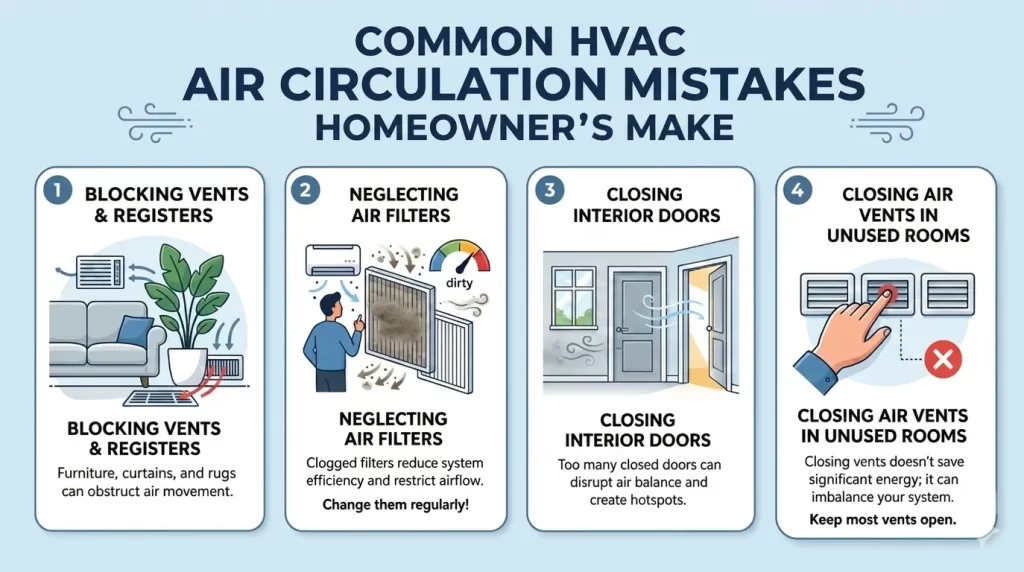
HVAC Air Circulation Mistakes Homeowners Commonly Make
Common everyday habits, from blocked vents to neglected maintenance, can reduce airflow efficiency and make your HVAC system work harder than necessary.
Conclusion
Good air circulation plays a key role in creating a healthier, more balanced indoor environment while helping HVAC systems operate more effectively. Whether addressing stale indoor air, uneven temperatures, or long-term airflow concerns, the right ventilation approach can significantly improve everyday comfort. At Classic Services, our professionals provide dependable HVAC and ventilation solutions designed to improve airflow, maximize system performance, and support better indoor living conditions for homeowners.
Frequently Asked Questions About Good Air Circulation in HVAC Systems
How often should HVAC air vents be cleaned?
HVAC air vents should generally be cleaned every 2–3 years, though homes with pets, allergies, or heavy dust buildup may require more frequent cleaning.
Why does my house feel stuffy even when the AC is running?
Restricted return airflow, clogged filters, duct leaks, or improper system sizing can cause poor air movement despite active cooling.
What causes weak airflow from HVAC vents?
Dirty filters, blocked ducts, closed vents, blower motor issues, or duct leaks commonly reduce airflow coming through HVAC vents.
How can homeowners improve HVAC air circulation?
Keeping vents open, replacing filters regularly, removing obstructions, and scheduling HVAC maintenance can significantly improve airflow performance.
Does furniture layout affect HVAC efficiency?
Yes, overcrowded rooms or blocked airflow pathways can limit air movement, making HVAC systems less effective at distribution.