Here’s exactly how that heat transfer works, step by step, and what it means for keeping your home comfortable through a Texas summer.
Cooling Cycle Quick OverviewAir conditioners don’t create cold air; they remove heat from indoor air and release it outside using refrigerant that cycles between liquid and gas. The process tackles two heat types: sensible heat (lowering the thermometer reading) and latent heat (removing humidity via the evaporator coil). Refrigerant absorbs heat indoors, gets pressurized by the compressor, releases heat outdoors at the condenser coil, then cools again through the expansion valve. Breakdowns anywhere in this cycle- low refrigerant, dirty coils, a failing compressor- cause weak cooling, lingering humidity, or rising energy bills. |
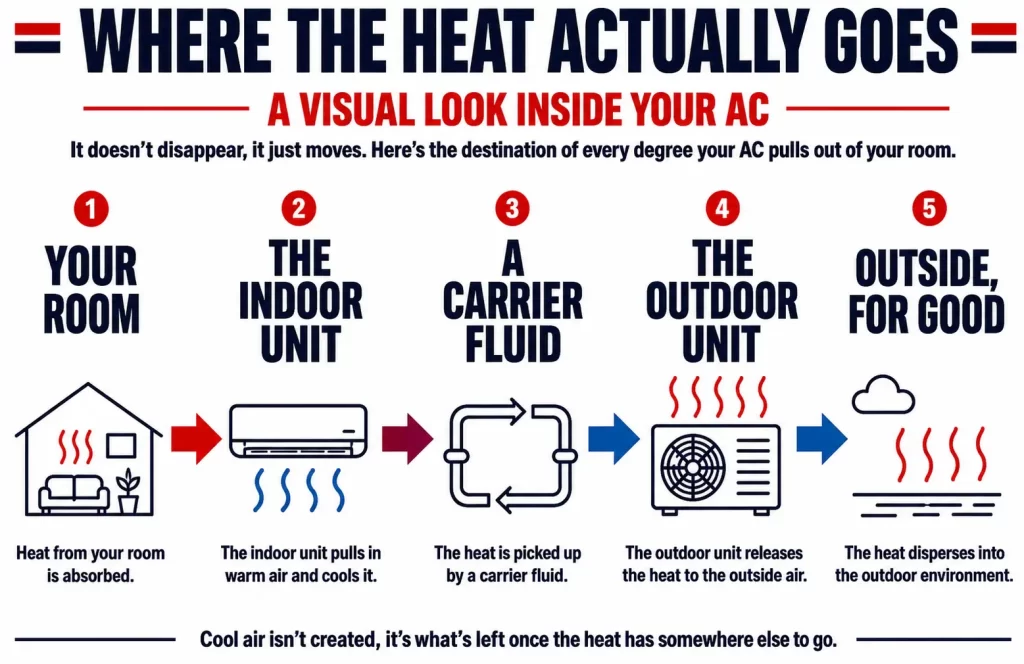
Tracking Heat Through Your Cooling System
Starting in your room and ending in the open air outside, this visual walks through the five points heat passes through before it finally leaves your home for good. Use it as a quick reference alongside the explanation above if you want to see the entire heat-removal journey at a glance.
Low refrigerant, dirty coils, or a struggling compressor can quietly drain your system’s efficiency all season. Get a full diagnostic before a small issue becomes a costly repair.
The Basic Principle: AC Doesn’t Create Cold Air
Cold isn’t something your system produces; it’s the absence of heat, and heat always moves from a warmer space to a cooler one on its own. Your air conditioner uses that natural tendency to its advantage: it forces heat out of your home’s warm air and releases it outdoors, using a refrigerant that cycles between liquid and gas to carry that heat along the way.
This matters more than it might sound like, because your AC is actually removing two different kinds of heat at once, and both affect how comfortable your home feels.
Sensible Heat: What Makes the Thermostat Number Drop
Sensible heat is the heat you can measure with a thermometer; it’s what makes your indoor temperature reading fall from 78 degrees to 72 degrees. When your system removes sensible heat, the air itself gets cooler, which is the most obvious sign your AC is doing its job.
Latent Heat: What Makes the Air Feel Sticky or Dry
Latent heat is different. It’s the energy tied up in moisture, and your AC removes it by condensing humidity out of the air as it passes over a cold coil, without necessarily changing the temperature reading at all. This is why a home can feel muggy and uncomfortable even at a technically cool temperature: if your system isn’t pulling enough moisture out of the air, the humidity lingers even after the thermostat says you’re at your set point.
A well-functioning air conditioner handles both jobs together, cooling the air and pulling out excess humidity, which is exactly why a system that’s low on refrigerant or overdue for maintenance can leave a room feeling clammy even when it’s technically running. This is another important part of how your air conditioner removes heat, especially in hot, humid Texas weather.
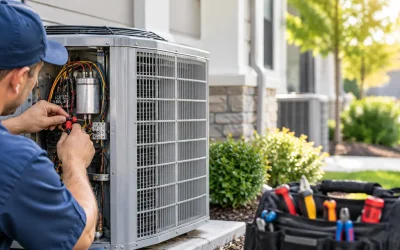
If your system is struggling to control temperature or humidity, routine inspection can help identify problems before they become more expensive. A professional can check components such as the evaporator coil, refrigerant level, compressor, and airflow.
For more information, see our full guide to AC repair, installation, and preventive maintenance in Texas to know what to expect.
The Step-by-Step AC Cooling Process
Every cooling cycle follows the same basic sequence, built around a refrigerant that absorbs heat indoors and releases it outdoors.
- Warm indoor air is pulled across the evaporator coil, a set of coils filled with cold, low-pressure refrigerant located inside your indoor unit.
- As that warm air passes over the coil, the refrigerant absorbs both sensible heat (cooling the air) and latent heat (condensing moisture out of it), causing the liquid refrigerant to evaporate into a gas.
- The now-cooled, dehumidified air is blown back into your home through the ductwork, while the refrigerant, now carrying all that absorbed heat, moves to the compressor.
- The compressor pressurizes the refrigerant gas, which raises its temperature significantly, preparing it to release heat outdoors.
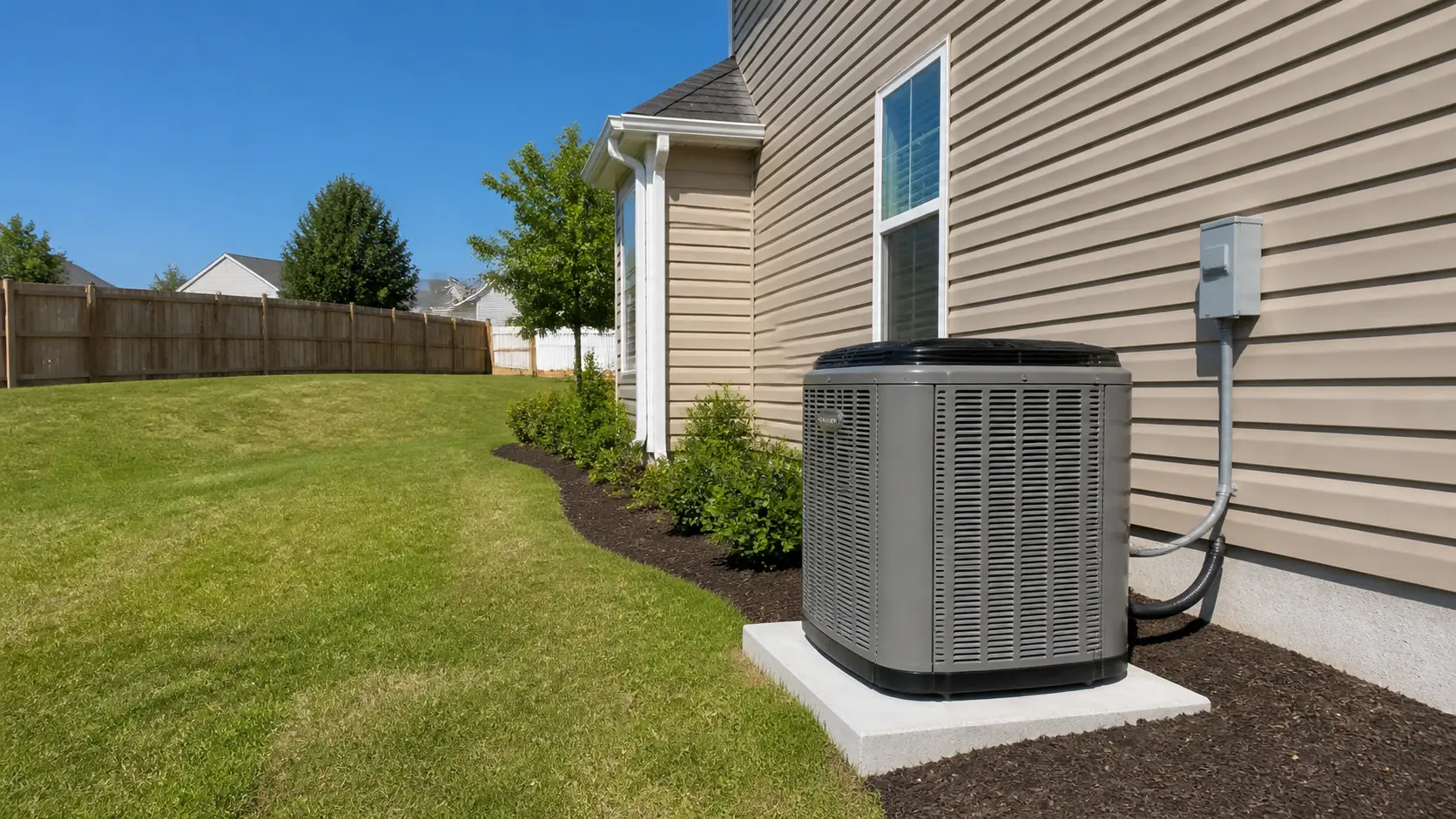
- That hot, high-pressure refrigerant travels to the condenser coil in your outdoor unit, where a fan blows outside air across it, carrying the absorbed heat away and causing the refrigerant to condense back into a liquid.
- The liquid refrigerant then passes through an expansion valve, which drops its pressure sharply, cooling it back down so it’s ready to absorb heat again as it re-enters the evaporator coil.
This continuous cycle is the foundation of how your air conditioner removes heat. It quietly moves heat out of your home and into the outside air, one refrigerant loop at a time. When any part of this cycle isn’t working correctly- low refrigerant, a dirty coil, a failing compressor- the whole process loses efficiency, and that’s usually when homeowners start noticing weaker airflow, higher energy bills, or a system that runs constantly without ever quite catching up.
If your system is running but your home still isn’t cooling the way it should, the issue is often somewhere in this cycle. Learn about the frequent AC repair components most likely to need attention before it turns into a bigger repair.
Conclusion
Once you understand that your AC’s real job is moving heat out, not manufacturing cold, a lot of common cooling problems start to make sense: weak cooling despite a running system, humidity that won’t go away, or bills that climb without an obvious cause. Every one of those symptoms usually traces back to a breakdown somewhere in the heat-transfer cycle you just read about.
Keeping that cycle running efficiently comes down to routine care and catching small issues before they become expensive ones. For homeowners looking for air conditioner repair in Seguin, New Braunfels, and surrounding areas, Classic Services Air Conditioning and Heating can inspect your setup and make sure every part of that cooling cycle, from the evaporator coil to the compressor, is doing its job.
Don’t wait for peak summer heat to expose a weak system. Catch refrigerant leaks, dirty coils, and compressor issues now, while a quick fix is still on the table instead of an emergency repair.
Frequently Asked Questions
Why does my house still feel humid even when the temperature is cool?
If your AC is removing sensible heat (lowering temperature) but not enough latent heat (moisture), your home can feel cool but sticky. This often points to a system that’s low on refrigerant, running short cycles, or in need of a maintenance check.
Does a bigger AC unit remove heat faster?
Not necessarily. An oversized unit can cool the air quickly without running long enough to remove adequate humidity, which is why proper sizing matters as much as raw capacity.
How often should I have my AC serviced to keep this cycle running efficiently?
Most manufacturers and technicians recommend an annual tune-up, though homes in hot climates often benefit from a check before peak summer season. Check out our complete guide on how often you should service your system.
What are signs that my AC isn’t removing heat properly anymore?
Weak airflow, warm air blowing from vents, longer running cycles without reaching your set temperature, and rising energy bills are common signs. Also, review these 8 signs your air conditioner needs repair to see if your system matches any of them.
Can I do anything myself to help my AC remove heat more efficiently?
Changing your air filter regularly and keeping your outdoor condenser unit clear of debris both support proper airflow, but issues within the refrigerant cycle itself require a licensed technician to diagnose and repair safely.